
Experiences in Seville
Walking tours, free tours and guided visits across Seville's old town, its monuments and the river quarter of Triana.
Destination
Seville
Date
Add dates
Seville: Tours & Experiences
11 experiences and tours


Free Tour: Seville by the Sea and the Golden Age
2hTip-based


Free Tour of the Triana Neighborhood
2hTip-based

Free Tour of the Santa Cruz Neighborhood
2hTip-based



Royal Alcázar of Seville: Entry Ticket
 From €21
Royal Alcázar of Seville: Private Guided Tour
1h 30m


Seville Cathedral & La Giralda: Skip The Line Ticket
1h 15m
From €18
Seville Aquarium: Entry Ticket
Free cancellation
From €17
Flamenco Dance Museum - Show Only
1hFree cancellation
From €29
Flamenco Dance Museum: Entry Ticket + Puro Flamenco Show
2hFree cancellation
From €33
Seville: Boat Cruise with Drink and Appetizer
1h 30mFree cancellation
From €25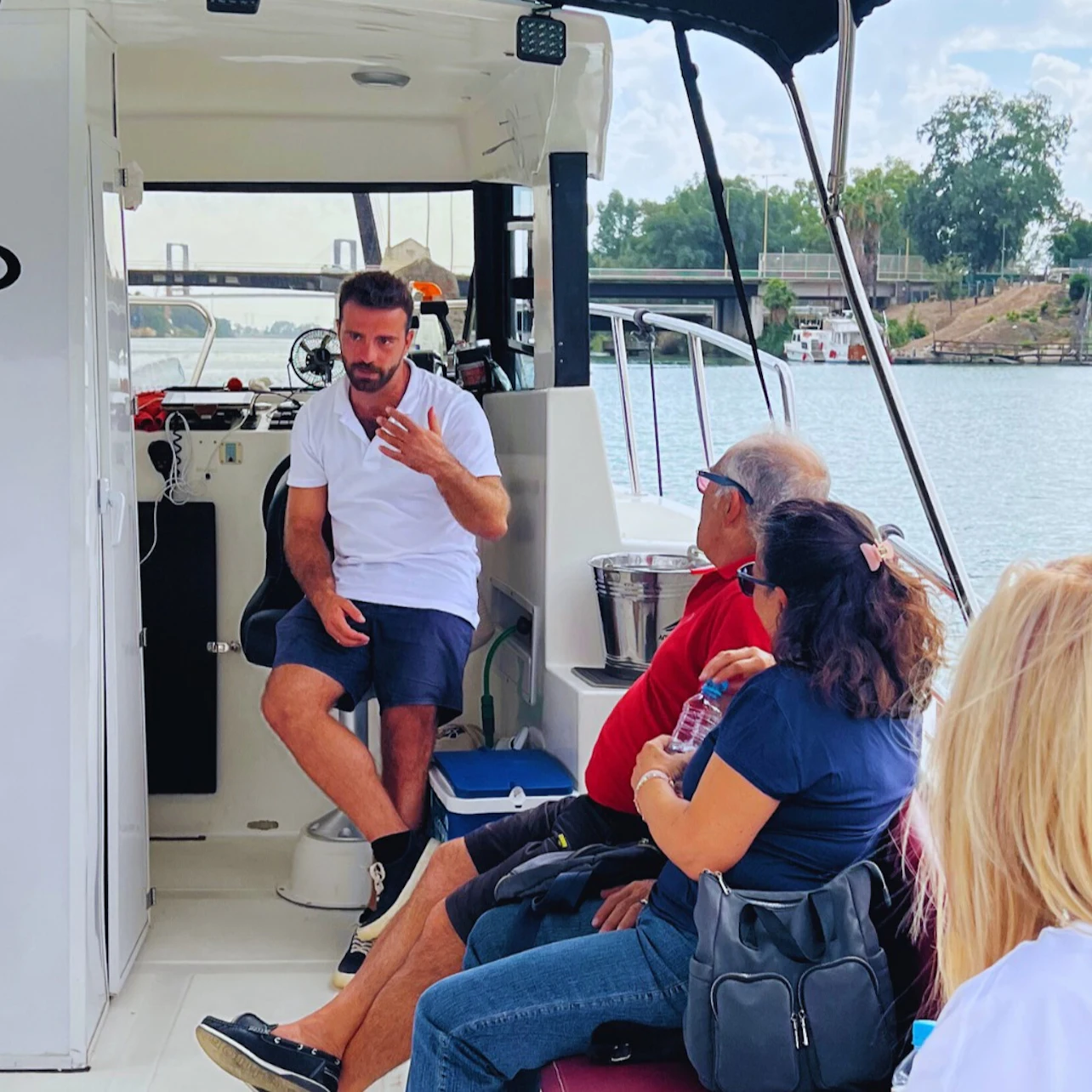
Seville: Guadalquivir River Guided Boat Tour
1h 30mFree cancellation
From €25Frequently asked questions
Yes. They run on a tip basis — you book without paying and give your guide what you thought the walk was worth at the end. Alongside them you will find small-group and private walks, and ticketed visits to the monuments.
The Alcázar, yes — it sells out days ahead through spring and autumn and rarely has tickets at the door. The cathedral is easier but still worth booking in season. Neither is included in a walking tour of the streets.
Spring and autumn. March to May is the city at its best and its fullest; late September to November gives you similar weather with far fewer people. Winter is mild and quiet, and summer is hot enough to plan around.
Regularly above forty degrees in July and August — Seville is one of the hottest cities in Europe. If you come then, do your walking early or late and treat the middle of the day as indoor time.
Very. The centre is flat and compact, and most of what visitors come for sits within a half-hour walk. The narrow streets of the old town are also the coolest way to cross the city in summer.
Yes. Triana was the sailors' and potters' quarter and has kept its own identity — ceramics, a working market, and a strong claim on the origins of flamenco. It is a ten-minute walk from the cathedral across the Isabel II bridge.
Comfortably. The high-speed train takes around forty-five minutes from Santa Justa, which makes the Mezquita a straightforward day trip.
Seville is a city built on the proceeds of an empire. For more than two centuries every ship returning from the Americas was legally obliged to unload here, and the wealth that came up the Guadalquivir paid for the cathedral, the palaces, and the vast archive that still holds the paperwork of the whole enterprise.
What that money left behind is unusually concentrated. The cathedral, the Real Alcázar and the Archivo de Indias stand within a few minutes of one another, and the old town runs off around them into lanes narrow enough to hold their shade at midday. Across the river, Triana keeps a character entirely its own.
A guided walk is the sensible way in — tip-based free tours, small-group walks, and ticketed visits to the monuments themselves.
About Seville
Seville is the capital of Andalusia and the largest city in southern Spain, sitting far enough up the Guadalquivir for the river to still be navigable — which is precisely why the Spanish crown made it the sole legal port for trade with the Americas in 1503.
The layers are visible everywhere. The Giralda was the minaret of the city's great mosque before it became the cathedral's bell tower. The Real Alcázar, still an official royal residence, was rebuilt by Christian kings in the Mudéjar style of the Muslim craftsmen they employed to do it. The Barrio de Santa Cruz, now the most walked quarter in the city, was its Jewish neighbourhood.
Seville is also the home ground of flamenco, of a tapas culture that runs late, and of two of Spain's great annual events — Semana Santa, and the Feria de Abril a fortnight after it.
What to expect on a Seville experience
A compact, flat historic centre with very little need for transport inside it. Most visitors spend their time within the triangle of the cathedral, the Alcázar and Santa Cruz, with the walk over the river to Triana as the obvious extension.
Expect queues at the two big monuments. The Alcázar in particular sells out days ahead in spring and autumn, and turning up at the door is rarely an option — book before you travel.
Expect heat between June and September. Seville is among the hottest cities in Europe, regularly above forty degrees in July and August, and the city organises itself around it: mornings and evenings are when things happen, and the middle of the day is for shade.
Best time to visit
Spring is both the best and the busiest. March to May brings warm days, orange blossom and the two events that define the local calendar — Semana Santa and the Feria de Abril — but the city fills completely and prices follow. Book months ahead for either.
Autumn, from late September into November, is the quieter equivalent: still warm, far fewer people, everything open.
Summer suits those willing to plan around the heat and keep to the early and late hours. Winter is mild and often sunny, the cheapest time to come, and the only season when the monuments are genuinely uncrowded.
Getting around
Walk. The old town is flat and small enough to cross on foot in half an hour, and much of it is pedestrianised or simply too narrow for traffic to be any use.
Beyond that there is a single tram line through the centre, one metro line, and a large municipal bike scheme. Taxis are plentiful and inexpensive by Western European standards.
Santa Justa station puts Madrid about two and a half hours away by high-speed train and Córdoba at roughly forty-five minutes, which makes a day trip easy in either direction. The airport is a quarter of an hour from the centre by road.


